

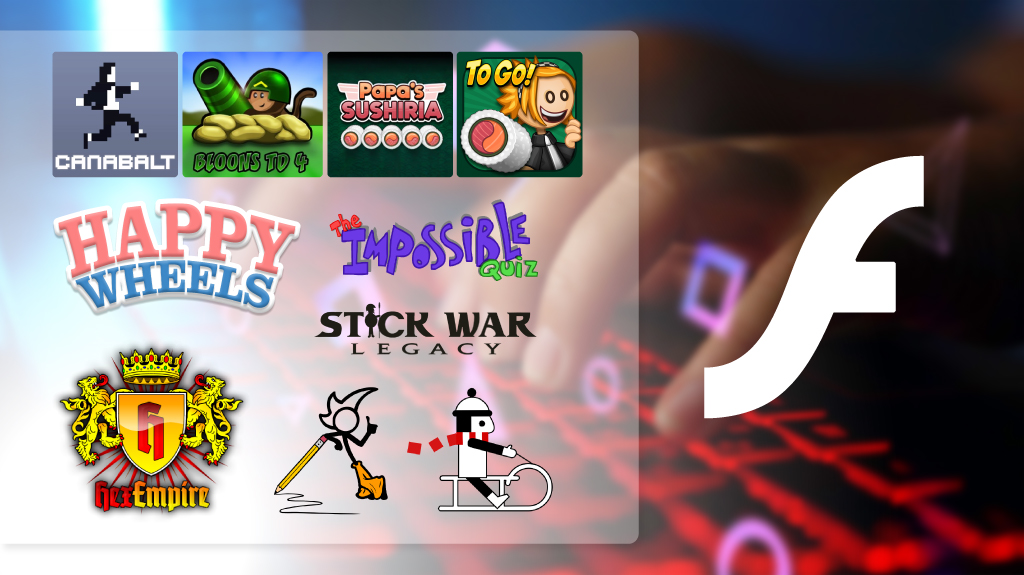
Browser games are one of the fastest-growing forms of online fun. Early text worlds have set the tone for shared play, and Flash games from the 2000s pushed simple ideas into rich web browser games.
Many of the Miniclip old games, classic webgames, and short Flash animation drew huge crowds of players because, in order to play, you only needed a browser.
The free model kept users loyal, and the lack of the need for installation helped these online games spread across the 2000s internet.
When Flash faded, developers moved to HTML5, WebGL, and WebAssembly. These powerful tools kept browser games alive and opened space for io games, casino titles, and cloud streaming. Now, cloud streaming adds high-end play inside a tab, which shows how strong the ecosystem remains.
The early days of browser games
Back in the good old days, browser games were very simple and made with simple tools. Early HTML and DHTML in Netscape 2.0 let developers place very small interactive parts inside a page.
These limitations have caused creators to build light designs that load fast on slow internet. Even with such limitations, users could enjoy playing short web browser games that shaped the idea of webgames as we know them today.
Back then, the text-based multiplayer worlds such as MUD and CyberMUD showed what online play could become. Players entered commands in plain text and shaped a shared world through words.
This made the multiplayer browser games very social and fun. Players could join at different times and still act inside the same space, which made the play loop flexible and kept the worlds active. These early online games taught players that a browser could host deep systems even without having sound or graphics.
Many communities grew around these worlds. For example, Neopets became a true hub where simple tasks, items, and pet care formed a lively loop. This community mixed gameplay with trading, forums, and fan groups.
Other early MUD communities used message boards to guide players, share maps, and build clans. These portals held the scene together and pushed more people towards browser games.
The popularity of these spaces came from the ease of access. Users only needed a simple browser. Most importantly, this shaped later hits, from classic Flash games to free online games on large portals.
Players who grew up with the 2000s internet still hold many good memories of these small browser games and their communities.
The rise of Flash technology
One of the biggest revolutions when it comes to browser games was the release of Flash. Adobe Flash Player was released in the late 1990s and offered tools that browsers never handled well.
Flash used vector graphics, which kept file sizes light. Its timeline system made smooth motion easy, and ActionScript added logic strong enough for full web browser games. These features let creators build ideas fast and share them with anyone who has the plugin installed.
Very quickly, Flash became very popular among casual players. New developers could learn the basics and release small webgames in only a couple of days. Also, file sizes remained small, so even the slowest connections could load levels in seconds.
What players needed was only a browser to enjoy free online games on the 2000s internet. This popularity helped Flash to grow into the main engine behind the classic Flash games that filled school labs and home PCs.
Also, large portals shaped the scene. Sites such as Newgrounds, Kongregate, Miniclip, Armor Games, and AddictingGames became hubs for the discovery of browser games.
These sites worked as both publishers and communities. Creators were able to upload projects, players rated them, and hits spread through word of mouth.
These portals used a simple model: ads around games, premium versions, and ad-share deals that paid developers based on play volume. The structure gave small teams of browser games developers a real path to reach an audience.
During the Flash era, we had many well-known projects. These included Line Rider, created by Boštjan Čadež, which spread fast through simple tools that let users draw their own tracks. Tom Fulp’s Alien Hominid grew from a Flash demo into a console title.
Also, the Fancy Pants series by Brad Borne showed how smooth motion and tight control could work in a simple browser window. Along with Bloons Tower Defense, Stickman projects, and Bejeweled-style titles, these hits proved that Flash could host high-end games.
Monetization was an essential part of this business because it helped the whole ecosystem grow. Developers used ad networks and widgets that embedded games across blogs and portals.
Each play earned small returns, which allowed developers of these browser games to create even more games and pushed Flash to its peak as the core platform for casual web play.
The advent of HTML5 and the demise of Flash
HTML5 arrived at a time when browser games needed a more modern base. Early drafts of this new standard added the canvas element. These new elements allowed browser game developers to draw shapes and animate without plugins.
WebAudio brought sound control inside the browser, and WebGL allowed real 3D graphics with hardware support. All of these tools covered the same ground that Flash did, but they worked inside the browser itself. As a result, web browser games gained better speed, became a lot smoother, and better supported.
The decline of Flash accelerated in 2010 when Steve Jobs published his public note, “Thoughts on Flash.” In this note, Jobs argued that Flash was closed, slow on mobile chips, and heavy on battery life.
He also said that Flash did not fit the direction of the mobile web. This public note sparked a wide debate over the future web standards and signaled that the Flash plugin had to go.
In addition to this, Flash faced many technical issues. It required frequent security patches, and its plugin made the pages pretty unstable.
Browsers struggled a lot with Flash because the early mobile hardware lacked the CPU power to run Flash at a decent speed. It crashed, drained the battery, and took a very long time to load. All this was a sign that Flash had to go and be replaced with open web tools.
So, Adobe announced that the legendary Flash Player will end its support on December 31, 2020. Major browsers soon blocked the plugin. Browser games platforms moved toward HTML5 and WebGL by default. This shift to these new tools was not sudden, but it forced developers to update their libraries, engines, and pipelines.
Studios also had to adapt. Some of them moved old Flash games to mobile and reached new players through the App Store and Google Play. Others rebuilt games in HTML5, often using tools like Haxe, CreateJS, or Adobe Animate’s HTML5 export.
This kept many webgames alive and helped creators reach modern browsers. For many small teams, the choice was to go mobile-first because of the higher earnings, since the mobile ecosystem had clear payment paths and large casual audiences.
This transition also widened the reach of game-related platforms, which included casino brands and review sites, as seen when Lemon Casino linked content to broader gaming communities.
This shift had very strong business effects. Some of the browser portals lost their dominance, but mobile markets grew exponentially and pulled many browser games developers into stable studios or long-term teams.
Even so, the browser games did not lose their place. HTML5, WebGL, and WebAudio kept browser games relevant and ready for new ideas, long after Flash closed its final chapter.
Modern browser games and the future
Modern browser games are relying on strong web standards. These include the WebGL, which handles 2D and 3D graphics with hardware support, and WebAssembly, which boosts speed for heavy logic.
Many browser game creators now export projects through engines such as Unity WebGL, which allows one codebase to reach most modern browsers.
All of these tools give web browser games the ability to run smoothly and deliver much better visuals than anything ever released in the Flash era.
A very popular branch of today’s scene is the “.io” genre. Simple multiplayer hits like Agar.io, and similar webgames use real-time play, short rounds, and fast matchmaking. These browser games run inside a tab and reach millions because players don’t need to install anything and can start enjoying smooth gameplay immediately.
Browser casinos and poker rooms have also changed immensely. Many casinos moved from Flash to HTML5 and WebSocket connections, which handle live cards, dealer updates, and chat tools in real time.
These technologies helped casinos offer stable casino online games that work on phones, tablets, and desktops without the need for a plugin.
Another huge novelty is cloud gaming with services like NVIDIA GeForce Now, Xbox Cloud, and Amazon Luna where users can play high-end titles inside a browser window.
These games run on remote hardware, and players receive a video stream. This new model only requires a fast internet speed and enough device power to decode the stream. It lets you experience premium games at excellent FPS for a monthly subscription which is also very affordable.
Hyper-casual games also influence the mobile browser games ecosystem. Their short loops, simple input, and quick restart flow translate well to browsers.
Many of these titles appear both as mobile apps and as browser versions made with lightweight engines. This helps developers reach players who want instant access without installing anything.
Overall, the future of browser games looks promising. The standards keep evolving and move forward, browsers gain more power year by year, and players continue to value quick access and cross-device play.
Preservation, emulation and cultural legacy
The Flash era was extremely title rich, it created thousands of legendary browser games. Many of these games vanished when support ended. Without preservation, these classics, from Miniclip games to classic Flash games, risk being lost forever.
So, here is where community driven projects like the Internet Archive and the Ruffle emulator are stepping in.
Ruffle runs Flash content inside modern browsers without plugins, while the Internet Archive hosts playable versions of hundreds of old webgames. These tools let new generations experience the Flash era and old generations relive the nostalgia.
However, preserving these flash games matters beyond nostalgia. Scholars in game studies, human-computer interaction, and media archaeology can analyze design evolution, interface choices, and community impact.
Early online games reflect the social and technological context of the 2000s internet, documenting how players connected, competed, and collaborated.
Culturally, these games are a critical part of our digital memory and identity. Playing or studying them helps people recall the past.
That’s why saving Flash-era browser games ensures that the history of interactive entertainment remains accessible for learning, research, and most importantly, enjoyment.
